
It's a new year, and for drivers across South Africa, the rules of the road have fundamentally changed. As of January 2026, the Administrative Adjudication of Road Traffic Offences Act, known widely as AARTO, is fully operational. This isn't just a tweak to existing laws; it's a complete overhaul of how traffic violations are handled. Gone are the days where a speeding ticket was just a fine you paid and forgot about. Now, every infraction adds up, and the stakes are your ability to drive at all.
The New Rules of the Road
Here's the thing about the new system: it treats traffic law more like a bank account than a criminal record. Under the previous framework, minor infractions often bypassed the courts entirely or got lost in the shuffle. Now, the AARTO National RolloutSouth Africa has shifted most infringements from criminal courts to an administrative process. This means the Traffic Courts are no longer clogged with minor parking tickets or expired license discs. Instead, those issues are handled administratively, with fines and points added directly to your record.
But don't think you can just ignore the warnings. The system introduces a demerit point structure that tracks every driver. Licensed drivers start at zero and can accumulate up to 15 points. Once you cross that line, your license is suspended. For learner drivers, the limit is much tighter—just six points before you're off the road. It's a strict threshold, designed to weed out habitual offenders without needing a full criminal trial for every infraction.
How the Demerit Point System Works
Turns out, the system does offer a way out. It's not entirely punitive. For every three months you go without committing a traffic infringement, one point is automatically reduced from your record. It's a redemption mechanism that rewards patience and good behavior. However, serious conduct remains a criminal matter. Drunk driving, reckless driving, and excessive speeding still land you in court with criminal charges.
The distinction matters because the consequences are different. Administrative fines hurt your wallet, but criminal charges hurt your record. The South African Police Service has been briefed on these distinctions to ensure officers know when to arrest and when to issue a ticket. This clarity was missing in previous years, leading to confusion on the streets.
Technology Meets Enforcement
By January 2026, several provinces had activated AI-powered traffic cameras capable of sophisticated monitoring. These artificial intelligence-enabled cameras are now watching for phones, seatbelts, and other traffic violations. It's a significant leap from the old speed traps. However, technology isn't perfect. The City of Johannesburg experienced significant operational challenges early in the rollout.
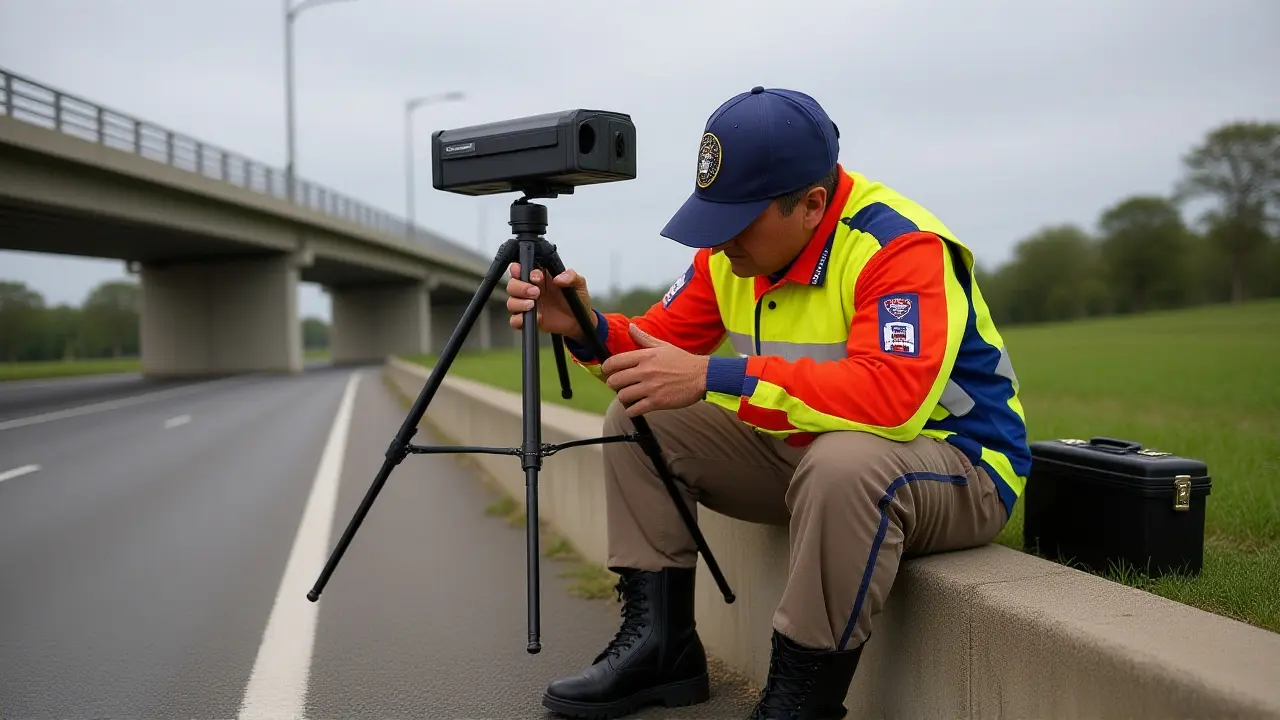
In January 2026, Moneyweb reported that the City of Johannesburg had lost access to all its speed cameras, allowing motorists to speed unchecked during this period. This camera outage represented a significant revenue stream loss for the metro. It was a stark reminder that even the best systems need maintenance. Mobile enforcement cameras, such as those positioned under pedestrian bridges near Malbor Drive in Johannesburg, have been deployed as part of the enforcement infrastructure to fill the gaps.
Legal Battles and Rights
There's a legal angle here that drivers need to understand. In a significant court ruling regarding traffic enforcement in 2026, the court confirmed that speeding is not a schedule one offence. This means motorists may not be arrested without a warrant for ordinary speeding unless the conduct amounts to reckless or negligent driving. This judgment reaffirmed important limits on the powers of traffic officers.
Despite these legal protections, enforcement methods are becoming increasingly advanced. The key message from authorities is clear: traffic fines are no longer merely financial penalties. Under the new AARTO system, they directly affect a driver's right to operate a vehicle, as accumulated demerit points can lead to licence suspension once thresholds are exceeded. The transition from primarily criminal traffic enforcement to an administrative system represents a fundamental restructuring of how South Africa handles road traffic violations.
What This Means for Drivers
For the average commuter, the shift is subtle but heavy. You might get a ticket for expired discs that you used to ignore. Now, that ticket adds points. If you ignore it, you get an enforcement order. If you keep piling up points, you lose your license. It's a behavioral nudge that aims to reduce accidents and improve road safety culture.
The details are still unclear regarding long-term compliance rates, but the infrastructure is in place. Drivers in Gauteng and other provinces are already seeing the impact. The goal is to create a safer environment where bad drivers are identified and removed from the road efficiently, rather than clogging the court system.
Frequently Asked Questions
How many demerit points can a licensed driver have?
Licensed drivers in South Africa can accumulate a maximum of 15 demerit points before facing license suspension. Once this threshold is exceeded, a formal Enforcement Order is issued, resulting in the suspension of driving privileges until points are reduced.
Do traffic fines still go to court?
Most minor to moderate violations, such as moderate speeding or expired discs, are now handled administratively under AARTO rather than in criminal court. Serious offences like drunk driving or reckless driving remain criminal matters requiring court appearances.
Can demerit points be reduced over time?
Yes, the system includes a redemption mechanism. For every three months without a traffic infringement, one point is automatically reduced from a driver's record. This encourages sustained safe driving behavior.
What happened to Johannesburg's speed cameras in 2026?
In January 2026, the City of Johannesburg lost access to all its speed cameras due to operational challenges. This allowed unchecked speeding for a period and caused significant revenue loss for the metro, highlighting technical vulnerabilities in the rollout.
Jullien Marie Plantinos
March 26, 2026 AT 05:18This is exactly what we need to stop the chaos!!! The roads are a mess without strict rules!!! People drive like they own the place!!! We need order!!! Law and order!!! Stop the crime!!! It is the only way!!! Safety first!!! Never forget that!!! Keep it safe!!! Don't mess around!!! The system works!!! Yes we do!!! We need this for sure!!!
Jason Davis
March 28, 2026 AT 04:40The system is actually designed to help everyone stay safe on the roads. You see how points work like a bank account for your driving history. If you drive well for three months you get a point back. It gives people a chance to fix their mistakes without court. Courts are full of bad cases and this helps clear them out. The cameras might seem scary but they just watch for safety. You dont need to worry if you follow the rules properly. Learners have less points so they need to be extra careful. Licensed drivers get fifteen points before suspension happens. That is a lot of room to make small errors and correct them. Ignoring tickets is the worst thing you can do now. Enforcement orders come fast if you do not pay the fines. Police know when to arrest and when to just issue a ticket. Drunk driving is still a criminal offence and you go to court. Just drive safe and you will not have any trouble with points. It is a good system for everyone.
Crystal Zárifa
March 29, 2026 AT 14:40Oh great, more points to lose while I drive to work. It is fun to lose money too. I suppose the cameras are watching me closely. At least I know where I stand now. It is nice to have a clear number. Maybe I will drive slower. Or maybe I will just ignore it. Who knows what happens next.
Serena May
March 30, 2026 AT 02:25Points system is strict 😬🚫🚗
Cheryl Jonah
March 30, 2026 AT 21:23They are watching you with the AI cameras everywhere. It is all about control. The government wants to know where you are. Do not trust the cameras. They are there to catch you. It is a big trap. You will get caught eventually. Stay away from the roads.
James Otundo
March 31, 2026 AT 04:35The sheer audacity of administrative overreach is palpable. One feels the weight of the state. It is a heavy burden for the common man. We are losing our freedom slowly. The points are just a tool. It is about power dynamics. I find this deeply concerning. We must resist this trend.
Sarah Day
April 1, 2026 AT 18:55I think it helps keep people safe on the roads. It is a good idea for sure. We need better safety. The points system makes sense. Everyone should follow the rules. It keeps traffic flowing better. I am happy to see this change. It is good for the community. We all win with safety. Let us all be careful. It is a positive step forward. Safety is key here.
ryan pereyra
April 3, 2026 AT 02:33The infrastructural paradigm shift regarding traffic adjudication is monumental. We are witnessing a regulatory evolution. The administrative framework is robust. It optimizes enforcement efficiency significantly. The demerit allocation matrix is complex. One must understand the liability implications. The technological integration is seamless. It is a strategic overhaul. We need to adapt to this. The compliance metrics are clear. It is a necessary evolution. The legal precedent is shifting. We must acknowledge the change.
Jane Roams Free
April 3, 2026 AT 22:01Just be careful and you will be fine driving. It is not that hard to follow. Take your time on the road. You will be ok with the points. Just drive safe and steady. It is all about awareness. You can handle this easily. Be kind to others too. Safety is the main goal. We are all in this together. It is a learning curve. You will do great.
Anthony Watkins
April 5, 2026 AT 02:28Americans need this not them!! 🇺🇸🚫 We have better roads here. They mess up the system. We should copy this. It is a good idea for us. We need order too. Stop the chaos. Safety first always. We must be strong. No more bad drivers.